Monday, August 31, 2009

Monday TOOOTTOOT - Week 6

YOOOOOOOOOO' HAM

this is what the internet thinks of me:

Sport?! hah. i think not... perhaps replace that with music and you'd be about right, unless sport is covering motorsports.. in which case then i guess its about right haha.

and heres me drawing... (for thoes of you thinking.. what the hell is that?? i decided to draw a picture of what deadmau5 is going to look like djing.. cause im going to see him december 5th at stereosonic!!! YEEEEEEEW! along with Axwell, John Dahlback, Surin and alot more totally awesome producers i've grown up listening to... ULTIMATE WIN!.. so yeah im just a tad excited about that...)


Heres my google maps... i musta been feeling slightly nostalgic at the time given the marked items.. and perhaps slightly jaded @ that time wasting painter hah. joy joy happy happy joy joy.


View Listen MATE, im not ya mate, k mate? in a larger map

and i think i've definitely cared and shared way too much tonight... (blame the bourbon..!!!) however, cougars officially go down well with kebabs and fried rice... and im going to sleep like a log tonight, those cans have hit me hard.. bit of a light weight these days, uni's just too busy, its majorly cutting in on my drinking time! FTL! haha

Lecture - Week 4 & 5!

== Big Screen to the Small Screen ==

Ok, so in todays lecture we endured a lengthy journey into the, oh so important, world of cinema...

Born, Cinema (Cin-ema) in 1895... the potential for this new media was seemingly endless.
An Aussie picture on Ned Kelly followed closely behind its birth.. a 60 - 70 min long journey or guns.. big metal armour stuff... and other important shit.

Europe thought they were pretty savvy, along with the US, joining in on the action around 1911.

1927 - saw the first 'Talkie' (picture with synced sound track) - the jazz singer
1929 - first colour film
1933 - first drive-in theatre
1937 - first full length 'Blockbuster film' - yewwwww, go snow white ;-)
1939 - TV's in New York track fairs.
1952 - First 3D film
1955 - Movies released on TV (its all about the mulla $$.. it was more beneficial for movie makers financially to do this.. so there ya go.. win-win ?)
1959 - 'Percepto' Vision.. 'Smello-vision' (Aromarama).. aromatic FTW by the way.
1963 - AAPEX VCR's for the regular folk.. you know.. 30,000 dollar units.. cheap aye?
- Multiplex theatres
1970 - Acceptance ... of smaller screens and TV's
- IMAX debut
1972 - Pay TV
1986 - First animated short film
1997 - First DVD

:) nnnnnnnnnnnnnnnnnn happy face.

Friday, August 21, 2009

Monday TOOOTT, week 4/5

Get CHHHYOOOW Scavengeeerr Hunt Awwwn!


1. What is the weight of the world's biggest pumpkin? How long did it take to grow?
worlds largest pumpkin is 1689 pounds, and is from Rhode Island. He began growing it since 2003 and it was judged in 2007.

http://www.boston.com/news/local/massachusetts/articles/2008/10/03/pumped_up/?page=2


2. What is the best way (quickest, most reliable) to contact Lilly Allen?

Via myspace - http://www.myspace.com/lilymusic Else, Lilly Allen is a known "Twitter"er


3. What is the length of a giraffe's tongue?


A giraffe's tongue is 18 - 20 inches.

http://www.ask.com/bar?q=length+of+a+giraffe%27s+tongue&page=1&qsrc=19&ab=0&u=http%3A%2F%2Fwww.sandiegozoo.org%2Fanimalbytes%2Ft-giraffe.html


4. How would you define the word 'glycomics'? In your own words, what does it really mean ? What does the term 'seagull manager' refer to?


The study of glycans and glycan-binding proteins (glycomes) found in various biological systems
.. the study of sugars in any living or non living thing/object.

http://www.griffith.edu.au/science/institute-glycomics

Seagull Manager: A manager who only interacts with employees to criticize their work or when a problem arises.

http://www.wordspy.com/words/seagullmanager.asp

5. What was David Cronenberg's first feature film? Which of his films Had 'Blondie' in it?

David Cronenberg's first 'feature film' was Stereo (1969)
Blondie (Deborah Harry) starred in his film Videodrome.
(http://www.freebase.com/view/en/videodrome)

6. When was the original 'Hacker's Manifesto' written?

January 8, 1986 after a hacker was arrested.
(http://www.puremango.co.uk/2004/11/the_manifesto_77/)


7. Why do phone numbers in Hollywood films start with '555'?
The '555' prefix came from the US system of exchange names

in the US they used the telephone exchange names, a system based on a two part basis where, you typed part of an exchange name and a few numbers after that. J,K or L were however excluded (these are the number 5 letters) and since there was such a low use of the prefix, Hollywood was encouraged to use 555 to prevent real subscribers being harassed by members of the public trying out the phone numbers quoted on Hollywood movies. INGENIOUS!

http://www.omegarobot.com/article/555.html


8. What is the cheapest form of travel from the Gold Coast to Sydney?

- Walking/Hitch Hiking

!! technically its free?

9. What song was top of the Australian Pop Charts this week in 1965?


10. Which Brisbane band includes Stephen Stockwell on keyboards and vocals?

The black assaassins

http://blackassassins.net/

Friday, August 14, 2009

Thursday week 3 lecture

Yooooooooh'

aight, so today we're blessed with the knowledge of various 'cine-speak'.. (you know.. language of the cinemas.. duuh)

So heres a run down of all the shots and lingo:

VLS/WS = Very Long Shot / Wide shot
LS = Long Shot
MLS = Mid Long Shot

MCU = Medium Close Up
CU = Close Up
BCU = Big Close Up
ECU = Extreme Close Up

We also learnt how each shot can help the audience understand the Who, WHHAARRT!?, wherezz?!, When? Whyzz? and how? behind a cinematic piece.

Who = Close up shots - Show characters in Detail ect.
What = Mid Shot - Shows action
Where = Long Shot - Shows detail of surrounding area, at the start of a scene, considered a establishing shot.
When = Wide Shot (by josh's standard), Close Up - Establishing Time
Why = Big Close Up - Demonstrates in greater detail a character and their actions.
How =Medium Close Up, a series of Close Ups - Describes events ect.

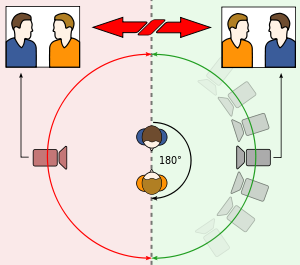
We also touched base on the 180 degree rule and rule of 3rds.
The following picture, describes the 180 degree rule.


The 180 Degree Rule:
The green and red arrowed lines show the line the camera can take around the two subjects in the conversation. Once the camera passes the grey dashed line, the subjects switch places on screen.

The Rule of Thirds:The rule of thirds is a tool to add dynamics to a photo or scene. An imaginary grid is to be considered. Points of attention are created, where the lines overlap, as seen in the above picture. Naturally our attention is drawn to these areas, therefore, items of interest are generally placed in the top or bottom upper and lower codrents of each left and right side.

The Inverted Pyramid


Peace out, touch base again mondayz yo'

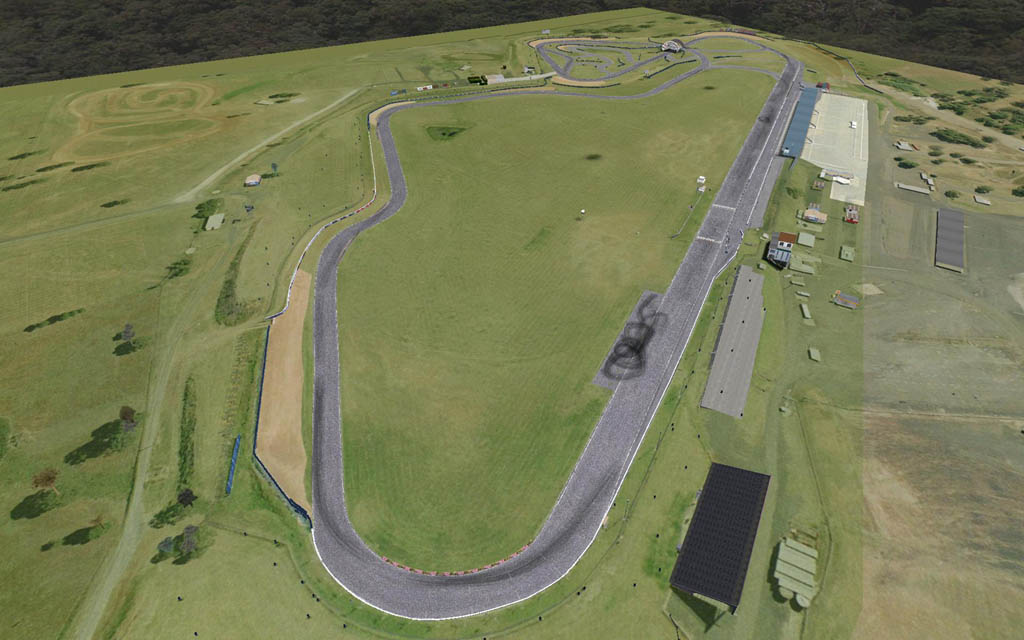
oh and check this car out.. complete & utter awesomeness..


OI GUYS... Lets watch a movie/television... (TASK)!!!!!!

Who = Close up shots - Show characters in Detail ect.
Belle and Aiden (Husband) shes got a cancer yo :( sad face. shes dieng, this close up explicates the emotion and sadness of the situation as she tells her husband.


What = Mid Shot - Shows action


Martha gets a shock when she shows Morag around the farm due to Ruby and Xavier's 'presence'


When = Wide Shot (by josh's standard), Close Up - Establishing Time

Showing the BBQ lunch in Tony and Rachel's backyard.. Rachel's baby is still missing, believed kidnapped..! SHOCK HORROR

Where = Long Shot - Shows detail of surrounding area, at the start of a scene, considered a establishing shot.


Summer Bay Surf club, setting the scence with a long shot of the club. Rachel's Child is missing! this sets the scene for where she approaches random people on the beach in a frenzy asking "have you seen this baby?!"


Why = Big Close Up - Demonstrates in greater detail a character and their actions.


Crazed Jane is watching again, alleged kidnapee, "i think my mums gone crrrrraaazzzzy", show her stalking Rachel and Tony.


How = Medium Close Up, a series of Close Ups - Describes events ect.


Belle just wants to float away from her troubles, shes got cancer and is dieing yo'. sad face. :(


Monday, August 10, 2009

Morning Tutorial 10/08/09

YOOO'

heres some picutres:


SICK

now they're cropped..


SICK

Heres a video already on youtube:


SICK

Heres a video i recorded and now have added to the blog:


SICK

Language of the screen definitions:

ECU is an abbreviation in the film and television world for 'extreme close up shot'. Generally, ECU's include extreme detail of a single item, purposely excluding the broader screen.

WS/VLS (very long shot / wide shot) is a shot that incorporates a wide view to observe the entire character, action or general item of intrest.

MS, medium shot, shows about half of the complete subject, the most common shots in movies ect.

Bibliography:
english.unitecnology.ac.nz/resources/units/piano/film_terms.html
http://www2.hawaii.edu/~ricky/etec/glossary.html
http://www.releasing.net/filmmaker/long_medium_close-up_shots.html

Thursday's Lecture 6th/08/09

yooooooooooooooooh'

so didn't get time to post a summary on thursday, but here it is now.

so i rocked up late and we had a new lecturer, who decided to give us a brief 1 hour history into the life of computers ha. From the garage nerds to massive company production of pc's.. it was intresting to say the least.

Here's a timeline!


- Charles Babbage"s 19th century Difference Engine (designed to calculate and print mathematical tables)
- Ada Byron, Lady Lovelace, annotated her own translation of an Italian article about Babbage, Sketch of the Analytical Engine, first conceived of a machine which would be able to compose and play music, produce graphics and be of everyday use. She also conceived the first computer program.
- Alan Turing, wrote a crucial paper clarifying the computability of numbers and the possibility of a machine to compute them, On Computable Numbers.
- Turing worked with teams of mathematicians and cryptographers to devise the first working computer, The Bombe which they used to break secret German "Enigma" codes during the war.
- After the War, Turing investigated programming, neural nets, and the prospects for artificial intelligence.
- Computers were first commercially produced by IBM in the 1950s.
- 1965, Gordom Moore propounded Moore"s law: the capacity of microchip"s doubles every two years.

History of the Internet:

1957:The United States Department of Defense formed a small agency called ARPA (Advanced Research Projects Agency) to develop military science and technology.
1961-1965:The Massachusetts Institute of Technology (MIT) started to research sharing information in small, phone-linked networks.
ARPA is one of their main sponsors.
1966: The first ARPANET plan is unveiled by Larry Roberts of MIT. Packet switching technology is getting off the ground, and small university networks are beginning to be developed.
1969:The Department of Defense commissions the fledgling ARPAnet for network research. The first official network nodes were UCLA, Standford Research Institute,UCSB, and the University of Utah. The first node to node message was sent from UCLA to SRI.
1971: more nodes join the network, bringing the total to 15. These new nodes include Harvard and NASA.
1973: ARPAnet goes global when the the University College of London and Norway's Royal Radar Establishment join up.
1974: Network intercommunication is becoming more sophisticated; data is now transmitted more quickly and efficiently with the design of TCP (Transmission Control Program).
1976: Unix is developed at AT and T; Queen Elizabeth sends out her first email message.
1979: USENET, the mother of all networked discussion groups, is developed.
1982: Internet technology protocols are developed, commonly known as TCP/IP (Transmission Control Protocol and Internet Protocol). This leads to one of the first definitions of an "internet" being a connected set of networks.
1984: Number of hosts is now up to 1000, with more being added every day.
1985: The first registered domain is Symbolics.com.
1987: Number of hosts breaks the 10,000 mark.
1988: First large-scale Internet worm affects thousands of Internet hosts.
1991: Tim Berners-Lee develops the World Wide Web.
1993: The World Wide Web's annual growth is now at a staggering 341,634%.
1994: ARPAnet celebrates 25th anniversary.
1995-1997: RealAudio introduces Internet streaming technology, dial-up systems emerge (America Online, Compuserve), the Internet backbone continues to be strengthened with the addition of MCI, Microsoft and Netscape fight for WWW browser supremacy, and there are now more than 70,000 mailing lists.
1998-present:The Internet continues to experience staggering growth. More people use the Internet to get connected to others, find information, conduct business, and share information than ever before in history.

http://websearch.about.com/od/whatistheinternet/a/historyinternet.htm

But hopefully we are onto a new topic next week.

yew.

Monday, August 3, 2009

Monday, Week 2 - Tutorial - "Convergence"


Technological convergence is the flow of content across different technological systems, inwhich evolve towards performing similar tasks.

alright so the most obvious new convergence technologies would be smart phones:

Of course the mobile phone was originally designed to make phone calls and perform text messages; smart phones are now miniature computers with a wide array of multimedia, entertainment and internet functions.

Gaming Consoles have evolved from purely gaming to internet browsers, music players, DVD players and social networking tools as well.


This is smart yo':
Photo Speakers - This clever device looks like a photo frame, but actually has speakers built in behind the frame... woaaaaah.. clevveerrzzz

Heres some pointless convergence technologies:


Reactable is considered a instantly responsive, visually compelling and socially interactive music-making experience.

USB finger... right...


Suitcase shaped car


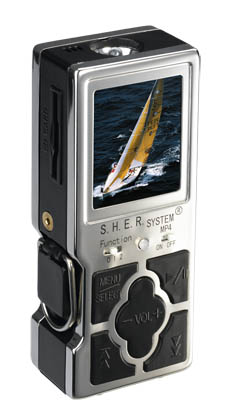
mp4... with breathalyzer and Pest Repellent functions!.. sick what i've always wanted.